The Collections
Objects that carried a household, and a people
Several huts on the grounds hold the museum's collections. They were gathered to show not just what Gambians made, but how each object fit into a day's work, a season's harvest or a lifetime's ceremonies.
The Ethnographic Collection
Daily survival, domestic life
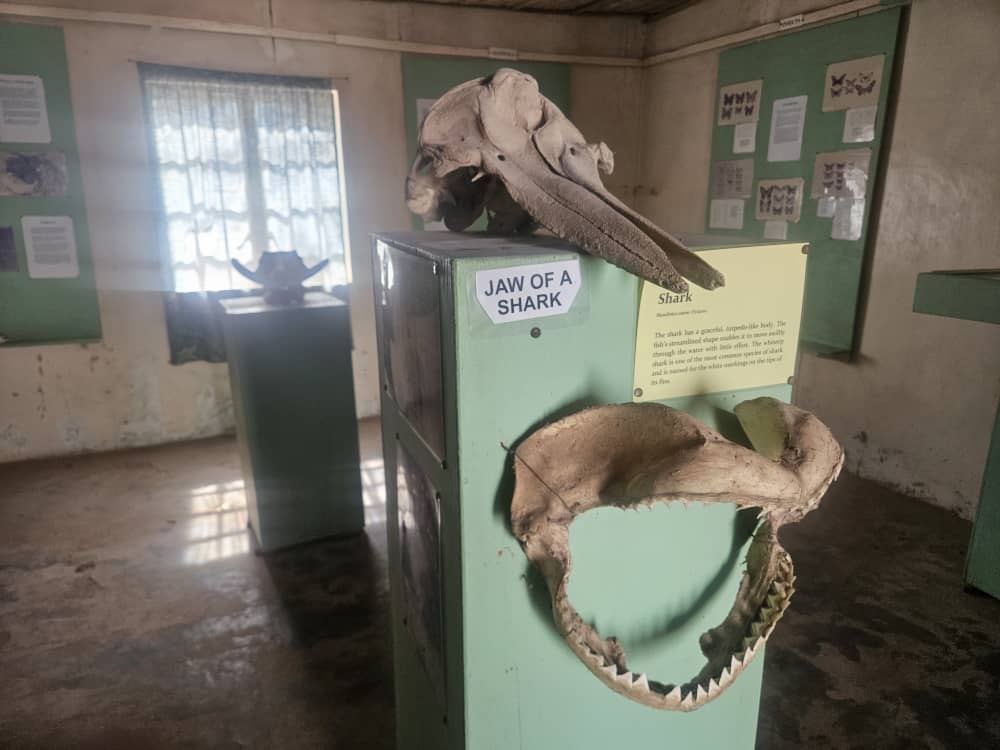
An extensive collection of traditional household utensils, historical artifacts, farming tools and clothing — an insight into how families fed, clothed and organised themselves centuries ago.
Household utensils
Calabash bowls, clay water jars, wooden spoons and woven winnowing trays used in every compound kitchen.
Farming tools
Short-handled hoes, groundnut lifters, rice-harvesting knives and fishing gear from the nearby Tanji coast.
Traditional clothing
Hand-woven strip cloth, indigo-dyed robes and ceremonial dress worn for naming days, weddings and initiation.
Historical artifacts
Trade beads, cowrie currency, amulets and iron implements that trace centuries of exchange along the coast.
The Ethnographic Collection
Instruments that still get played
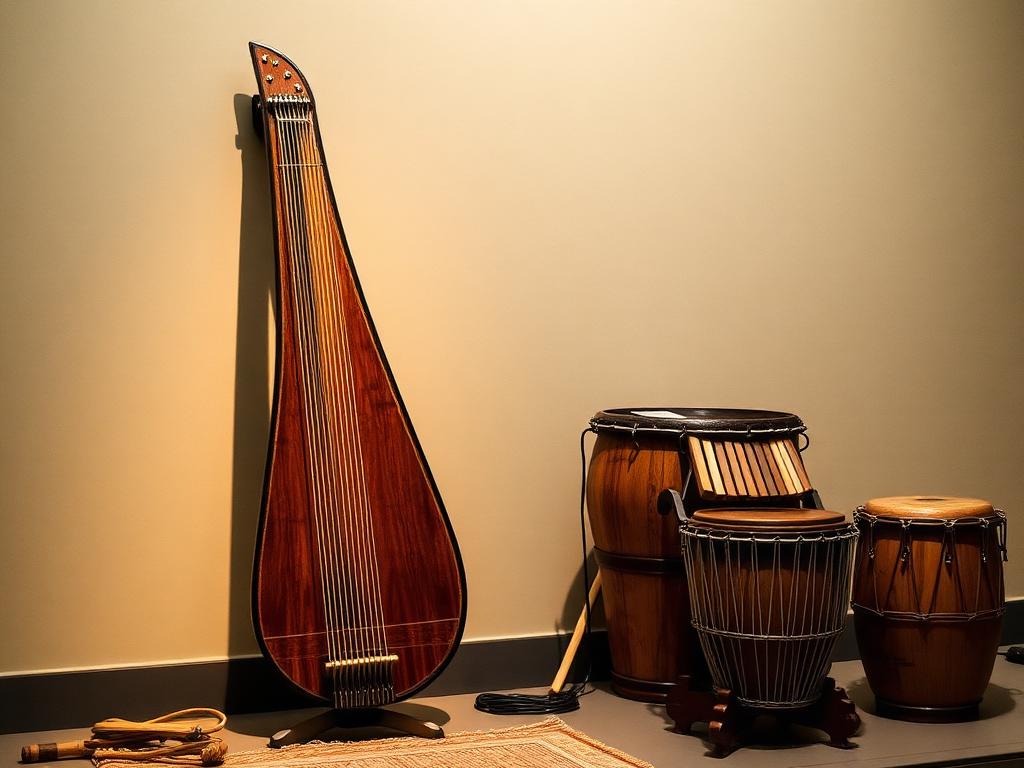
A dedicated hut showcases a wide array of traditional West African instruments. Many are not silent exhibits — visiting musicians and resident performers take them down and play them during demonstrations.
Kora
A 21-string lute-bridge-harp built on a large calabash gourd, the signature instrument of the griot families who keep oral history.
Balafon
A wooden xylophone with gourd resonators tuned beneath each key, played with padded mallets at ceremonies and celebrations.
Djembe & sabar drums
Goat-skin hand drums used for dance, work rhythms and announcements — each rhythm carrying a specific meaning.
Ngoni & riti
A plucked lute and a single-string bowed fiddle, older cousins of instruments now heard across the West African diaspora.